What most people get wrong when asking what is DeepSeek Harness: it isn't a model — it's an operating layer
Picture this: you paste a stubbornly failing Python test—a nasty ValueError in your Pandas dataframe alignment—into a chat window. The AI confidently replies, explains exactly why the matrix multiplication is failing on line 42, and hands you a beautifully formatted code snippet to fix it. You feel relieved, but there is a glaring problem: the test is still failing on your machine, and now you have to manually copy the code, run the test, read the new stack trace, and paste the error back to the AI. The model answered your question perfectly, but nothing actually executed the code, verified the new state, or shipped the fix. The gap between "answered" and "done" is the core frustration of AI coding, and it perfectly answers the question of what is DeepSeek Harness: it is the critical bridge built specifically to cross that gap.
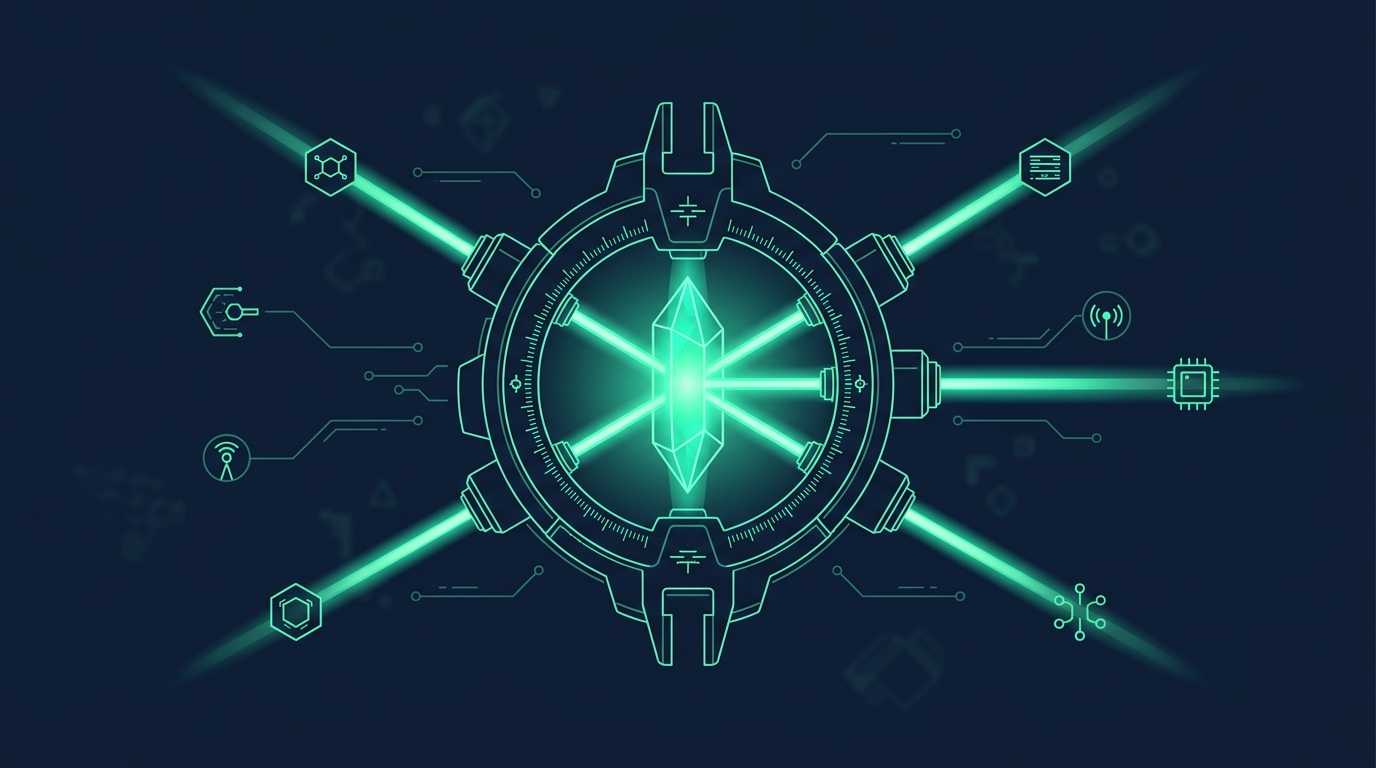
Most people assume that a stronger, smarter model automatically produces a better, more capable autonomous agent. It doesn't. We have been trained by years of chat interfaces to think the neural network is the whole product. But a raw language model cannot call tools, it cannot hold state across multiple actions, it cannot run a loop, and it certainly cannot verify its own results. When developers hear the name, they usually expect to read about a new transformer architecture. The simplest accurate statement is this: it is not a model at all; it is the operating layer that turns a static model call into a working agent. It is the scaffolding—comprising tools, memory, the agent loop, and context limits—that lets the model actually do work on your machine.
DeepSeek's own engineering leadership treats this scaffolding as their core product bet, operating under the explicit formula "Model + Harness = Agent." According to the analysis in Model + Harness = Agent: Inside DeepSeek's Play to Own AI Coding, team lead Cui Tianyi (ex-Jane Street) joined in March 2026, and by August 1, 2026, the company was actively recruiting closed-beta testers. An August 11 WeChat account registration under Beijing DeepSeek further cemented this as a massive strategic push. They are actively hiring "Agent Harness R&D Engineers" to build desktop integrations, manage memory, engineer the agent loop, and handle the Model Context Protocol (MCP) standards required to tie it all together. This is the definition of building an operating system, not tuning a frontier model.
Nothing has actually been explained yet, though. A skeptic watching the AI "try and fail" to fix that test would say: "This is just a prompt-engineering problem. The model is doing all the reasoning; a loop that calls tools is just plumbing, not a real product. Show me a single benchmark where the harness — not the model — actually moved the needle." They are right to push back. A loop is plumbing. But as we'll see, that plumbing is exactly why benchmark scores are currently exploding across the industry.
Now that we've named the gap, let's build an accurate picture of what a harness actually does — starting with the simplest analogy that's ever helped me.
The model is the chef; the harness is the kitchen — without one, you get a recipe, not dinner
Think of your frontier language model as a brilliant, Michelin-starred chef locked in a dark closet with nothing but a notepad. You slide food orders under the door, and the chef slides flawless, highly detailed recipes back out. But you aren't hungry for a recipe; you are hungry for dinner. You certainly don't want to go chop the onions and fire up the grill yourself while the chef sits in the dark waiting for your next prompt. The harness is the kitchen. It provides the stove, the ingredients, the taste-and-adjust feedback loop, and the physical mechanism to plate the dish and serve it.

To make this concrete, let's map the technical components of a DeepSeek agent harness guide to our kitchen. Tools are the stove and knives—these are the file access permissions, shell command executors, and API integrations the model can invoke. If the AI needs to check a configuration file, a tool lets it run cat config.json instead of hallucinating what might be inside. Without them, the model can only talk. Imagine asking a chef to bake a cake, but they can't actually open the fridge; they can only guess how many eggs you have. In code, this looks like a model confidently telling you to change line 50 of app.js when your file only has 30 lines. Tools fix this. When a harness provides a bash execution tool, it literally hands the model a terminal. The model can run ls -la to see the actual directory structure, or use grep to find exactly where a variable is defined, grounding its reasoning in absolute reality.
Memory is the chef's shopping list and recipe notes, holding the conversation state and long-term storage so the model remembers what it did three steps ago. Have you ever had a coding assistant suggest a "fix" that you literally just tried and rejected ten minutes prior? That is a memory failure. A good harness maintains a rolling transcript of actions, allowing the model to look back and realize: "I tried updating the package, that threw a dependency conflict, so now I must downgrade the node version." Context management is the art of keeping the right ingredients within arm's reach on the counter. It determines exactly what fits in the model's limited context window without overwhelming it with irrelevant logs or massive, unreadable minified files. If you dump a 10,000-line minified Webpack bundle onto the counter, there's no room left to cook. The harness actively curates this space, perhaps using an AST (Abstract Syntax Tree) parser to only extract the specific function definitions the model actually needs to see, leaving the rest of the file safely in the pantry.
The true magic happens in the agent loop, which is the culinary equivalent of "taste, adjust, re-cook." The harness calls the model, runs a tool based on the model's output, inspects the result, decides the next step, and repeats until the job is done. Crucially, the harness owns the stopping condition. It passes test outputs, syntax errors, and raw stack traces back to the model as evidence, forcing the chef to taste the soup before declaring it finished. Think about a stubbornly failing database migration. The loop starts with the model writing the SQL. The harness executes it, catches a Foreign Key Constraint Failed error, and automatically hands that exact error text back to the model. The model reads the error, writes a new script dropping the constraint first, and tries again. The loop spins—taste, adjust, re-cook—without you ever touching the keyboard, until the migration finally passes.
The open-source community repository zjukop/deepseek-harness breaks this operating layer down into six distinct responsibilities: contract, context, execution, evidence, repair, and publication. This is a perfect checklist for what a real harness must own. If your setup isn't managing the execution and feeding the evidence back for repair, you don't have a harness; you just have a chat script.
Once you can picture the kitchen, the next rung is why DeepSeek's own leadership treats this layer as the product — and why the benchmarks made developers do a double-take.
Why the harness layer — not a bigger model — is becoming the decisive battleground
If the kitchen analogy explains what a harness does, the car analogy explains where it fits in the DeepSeek model development pipeline. The model is the engine; the harness is the chassis, transmission, and steering column. A 1,000-horsepower engine sitting in your driveway doesn't take you to the grocery store. It just makes a lot of noise. The harness is what translates raw horsepower into a drivable, autonomous vehicle that can navigate traffic, detect obstacles, and actually arrive at the destination safely.

Understanding this pipeline placement clears up massive industry confusion. Post-training is just engine tuning, where developers make the model aware that tools exist. Evaluations and benchmarks are the test drives. Crucially, tests like Terminal-Bench 2.1 and DeepSWE measure the model plus harness pair, not the model in a vacuum. Finally, deployment is real-road driving, where the DeepSeek Harness vs Claude Code battle is actually fought, and where the harness carries the entire load of error recovery and state management.
The binding constraint on AI agent performance today is the harness, not the model. DeepSeek V4 Flash 0731 recently jumped from 61.8 to 82.7 on Terminal-Bench 2.1 (which tests real-world autonomous tasks like fixing a broken React component or debugging a Dockerfile), and from 7.3 to 54.4 on DeepSWE. This was achieved via post-training on a 284B/13B Mixture-of-Experts architecture (where different subnetworks handle different specialized tasks), but the true unlock was the scaffolding. The Antigma leaderboard independently confirms that 82.7% win rate across 89 tasks was achieved using a highly optimized public harness.
Even more shockingly, harness-side changes alone dictate the winner. Changing only the editing-tool format in a recent 15-model coding benchmark produced a 10x gain in success rates. GPT-5.2-Codex jumped from 52.8% to 66.5% on Terminal-Bench 2.0 strictly via harness-side fixes. Meta-Harness automated its own harness optimization to reach 76.4%. In all of these cases, there were zero model-weight changes—the engine stayed exactly the same, but the steering column got exponentially better.
Claude Code and Codex are highly polished, owned harness products wrapped tightly around strong models. DeepSeek's Harness team is building aggressively to own that exact same infrastructure layer, because they know it is the strategic differentiator. Benchmark claims shouting "model X beats model Y" are fundamentally dishonest; they are comparing model-plus-harness pairs, and the harness is the hidden variable dictating the outcome. (This is exactly why the starter-harness checklist—which you can subscribe for at the end of this guide—walks you through evaluating a harness on your own machine, before trusting any benchmark).
But here's where the tidy picture gets messy: the official harness, as of right now, basically doesn't exist for the public — which is exactly why you should build your own.
Benchmark claims shouting "model X beats model Y" are fundamentally dishonest; they are comparing model-plus-harness pairs, and the harness is the hidden variable dictating the outcome.
The official harness is still a closed beta — and the community is already filling the gap
Here is the counterintuitive truth about the DeepSeek V4 Flash harness setup: as of August 3, 2026, there is no verified first-party DeepSeek Harness product page, no public installer, and no official GitHub repository. Aside from a few team-member statements about closed-beta testing, it is vaporware to the general public. It's gotten so confusing that fan-site FAQs are actively warning users to require a verified first-party DeepSeek destination to avoid downloading malware disguised as the official harness.

Nature abhors a vacuum, and the open-source community is already shipping the missing layer. Projects like CodeWhale (a fast Rust-based terminal harness), zhnt/loushang (multi-model orchestration with smart provider routing), CowAgent (a reference implementation of pure harness engineering), and zjukop/deepseek-harness are all fully functional with DeepSeek today. None of them are official, but they are getting real work done right now.
This Wild West ecosystem introduces real friction. A same-model comparison detailed on grigio.org tested OpenCode, pi, jcode, and reasonix against the exact same DeepSeek V4 Flash 0731 model. The results were jarring: they found massive RAM-usage differences—some spiking heavily just to maintain conversation state—and only 2 out of the 4 harnesses successfully navigated to a valid coding solution. This proves irrevocably that harness choice changes your outcomes entirely, even when the underlying brain is identical.
The unlock here is that you do not need to wait for a closed beta invite. You can build a minimal, functioning harness in roughly 150 lines of Python using DeepSeek's public API building blocks, documented thoroughly at DeepSeek Code: API Building Blocks for Agents. First, you need tool calls. This isn't magic; it is just standard JSON. You write a Python function that runs local terminal commands, and you describe that function to the API. When the model needs to check a file, it pauses its text generation and emits a JSON block requesting the run_terminal tool with the argument cat config.json. Your 150-line Python script catches that JSON, actually runs the command on your machine, and sends the raw terminal output back as the next message.
Second, you need thinking mode. DeepSeek exposes this as a simple API flag that gives the model a private scratchpad to reason out loud before answering. It lets the model internally debate: "Wait, the user says the API is failing, but before I rewrite the routing logic, I should probably ping the server to see if it's even online." This drastically reduces the number of wasted, hallucinated tool calls.
Finally, you need strict context limits. You have to write a few lines of code to programmatically truncate those terminal outputs. If your test suite spits out 50,000 lines of warnings, feeding that raw block back to the API will instantly blow past your token limits and crash the loop. A basic harness catches that massive string, slices off everything but the bottom 500 lines where the actual stack trace lives, and feeds only that critical sliver back to the model.
Because you are building this plumbing yourself, you must prioritize security. If an autonomous agent decides the best way to fix a disk space error is to run rm -rf /, your harness better not let it. Run any homegrown or community harness inside a Docker container with least-privilege file and network access before you ever trust it with local shell access. The current discussions on platforms like Hacker News regarding harness containerization are dangerously sparse, meaning authoritative security guidance is an open gap. You have to be your own security reviewer.
An engineering lead would almost certainly push back here: "Why build on unverified community repos that can vanish overnight or ship insecure code? DeepSeek is clearly investing millions in an official Harness — the rational move is to wait for the closed beta, not stake production work on hobby projects."
The response is simple opportunity cost. The community harnesses are already in daily use, solving real problems. Because the model is just a swappable API endpoint, a properly containerized, portable harness layer means you are never locked in. You can swap the official DeepSeek Harness in the very second it drops. Waiting costs you months of productivity that a closed beta will never repay.
Build with the community now, keep your harness layer portable, and when the official beta ships you'll already know exactly what to check — because you built one yourself. Subscribe below for the starter-harness checklist and official-beta updates.
References
- https://blog.4sapi.com/blog/deepseek-harness-ai-agent-framework
- https://agentmarketcap.ai/blog/2026/06/05/deepseek-ai-harness-jane-street-deterministic-agent-scaffolding
- https://dlcmh.github.io/deepseek-harness
- https://antigma.ai/eval
- https://github.com/zjukop/deepseek-harness/blob/main/README.en.md
- https://github.com/zhnt/loushang
- https://github.com/Hmbown/CodeWhale
- https://grigio.org/which-is-the-best-coding-harness-for-deepseek-v4-opencode-vs-pi-vs-jcode-vs-reasonix/
- https://news.ycombinator.com/item?id=48899674
- https://news.ycombinator.com/item?id=48176033
- https://www.besthub.dev/articles/deepseek-s-harness-how-agent-harness-engineering-is-shaping-the-next-llm-agent-era-bf98e50742af
- https://deepseek-harness.org/faq/
- https://deepseek-harness.org/deepseek-code/